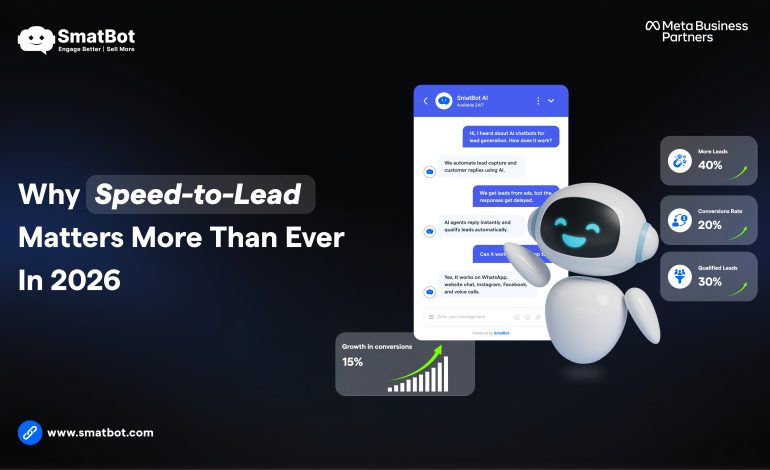
Why Speed-to-Lead Matters More Than Ever in 2026

venkat karthik
- May 14, 2026
- 4 min read
Introduction
In today’s digital-first world, generating leads is no longer the biggest challenge, responding to them fast enough is.
Businesses invest heavily in ads, SEO, and campaigns to drive traffic. But what happens after a lead comes in often determines whether that opportunity converts… or disappears.
The reality is simple:
The faster you respond, the higher your chances of conversion.
In 2026, where customers expect instant responses across channels like websites, WhatsApp, and calls, speed-to-lead has become one of the most critical factors in driving revenue.
What is Speed-to-Lead?
Speed-to-lead refers to the time it takes for a business to respond to a new lead after they show interest, whether through a website form, WhatsApp message, phone call, or ad click.
This response time could range from:
- A few seconds
- A few minutes
- Several hours (or worse, days)
And this difference directly impacts conversion rates.
Why Speed-to-Lead Matters More in 2026
Customer expectations have changed drastically.
Today’s buyers:
- Expect immediate responses
- Explore multiple options simultaneously
- Lose interest quickly if there’s a delay
With multiple competitors just one click away, the first business to respond often wins the deal.
The Cost of Slow Response Times
When businesses delay responding to leads, they risk:
- Losing high-intent prospects to competitors
- Reduced engagement and interest
- Lower conversion rates
- Wasted marketing spend
Imagine spending thousands on ads… only to lose leads because no one responded in time.
👉 That’s not a marketing problem – it’s a response-time problem.
How Speed Impacts Lead Conversion
Speed directly influences how likely a lead is to convert.
When a business responds instantly:
- The customer is still actively interested
- The intent is high
- The conversation flows naturally
But when responses are delayed:
- Interest drops
- The customer explores alternatives
- The opportunity weakens
👉 Faster response = Higher conversion probability.
Common Challenges That Slow Down Response Time
Many businesses struggle with speed-to-lead due to:
1. Manual Lead Handling
Teams rely on manual processes to check and respond to inquiries.
2. Limited Team Availability
Leads coming in after business hours often go unanswered.
3. Multiple Communication Channels
Leads come from websites, WhatsApp, social media, and calls, making it hard to track everything.
4. High Volume of Inquiries
During campaigns or peak times, teams get overwhelmed.
5. Lack of Lead Qualification
Teams spend time filtering leads instead of engaging quickly.
How AI Agents Solve the Speed-to-Lead Problem
This is where AI Agents (Chat + Voice + WhatsApp automation) become a game changer.
1. Instant Response Across All Channels
AI agents can respond immediately on:
- Website chat
- Social media
- Voice calls
No delays. No missed opportunities.
2. 24/7 Lead Engagement
Even outside business hours, AI agents ensure that every lead gets an instant response.
👉 Your business is always “on”.
3. Automated Lead Qualification
AI agents can:
- Ask qualifying questions
- Capture key details
- Identify high-intent leads
This helps teams focus on closing, not filtering.
4. AI Voice Agents for Incoming Calls
Missed calls = missed revenue.
AI voice agents can:
- Answer calls instantly
- Engage customers naturally
- Capture lead details
- Route calls when needed
5. Seamless Omnichannel Experience
AI agents connect conversations across:
- Website
- Voice
- CRM systems
Ensuring consistent and fast communication everywhere.
Real Business Impact of Faster Response Times
Businesses that improve speed-to-lead typically see:
- Higher lead-to-customer conversion rates
- Increased engagement
- Reduced drop-offs
- Better ROI from marketing campaigns
👉 Speed is no longer a “nice to have”. It’s a revenue driver.
Best Practices to Improve Speed-to-Lead
If you want to improve your response time, focus on:
- Automating first responses
- Centralizing communication channels
- Using AI for lead qualification
- Ensuring 24/7 availability
- Reducing dependency on manual processes
Why Speed Will Define Competitive Advantage in 2026
In a world where customers expect instant gratification, businesses that respond faster will always outperform those that don’t.
Speed is not just about customer experience, it directly impacts:
- Revenue
- Conversion rates
- Customer satisfaction
- Brand perception
👉 The fastest responder often becomes the chosen provider.
Conclusion
Generating leads is only half the battle.
The real opportunity lies in how quickly you engage with them.
AI-powered automation enables businesses to respond instantly, qualify leads efficiently, and maintain consistent communication across channels ensuring no opportunity is missed.
In 2026, speed-to-lead is not optional, it’s essential.
Ready to respond to every lead instantly?
With SmatBot AI Agents, you can automate conversations across website chat, WhatsApp, and voice -ensuring faster responses, better engagement, and higher conversions.
👉 Book a Free AI Automation Demo today and turn speed into your competitive advantage.